Have you ever looked in the mirror and noticed how your skin seems to change its mood from week to week, or year to year? I know I certainly have. For a long time, I thought these shifts were just about the weather or the skincare products I was using. But as I dove deeper into the science of our bodies, I discovered a fascinating hidden world working beneath the surface. Our bodies rely on chemical messengers to keep everything running smoothly, and when it comes to maintaining a radiant, vibrant complexion, these messengers are the true directors of the show.
Today, I want to take you on an empowering journey to understand exactly how our bodies evolve over time. When we talk about hormones and skin aging, we are actually exploring a beautiful, natural transition. By understanding this relationship, we can stop fighting our bodies and start supporting them. Knowing how these internal changes affect our outer glow gives us the power to make smart, proactive choices for our health and our appearance.
Meet Your Skin’s Internal Support Team
To truly grasp how our complexion shifts over the years, I think it is incredibly helpful to meet the main characters involved. Our skin does not age in a vacuum. Instead, it responds directly to the natural ebb and flow of our internal chemistry. When we are younger, our internal chemistry provides a constant supply of nutrients and signals that tell our cells to stay plump, firm, and hydrated. As we gain wisdom and experience, these signals naturally soften. Let’s look at the specific players that influence our skin’s texture, tone, and elasticity.
Estrogen: The Hydration and Plumping Hero
If I had to name a favorite hormone for our complexion, it would undoubtedly be estrogen. I like to think of estrogen as the ultimate beauty director. It is responsible for stimulating the production of collagen, which is the structural protein that acts like the scaffolding for our skin. Estrogen also boosts hyaluronic acid production, a natural substance in our bodies that binds to water and keeps our skin looking deeply hydrated and bouncy.
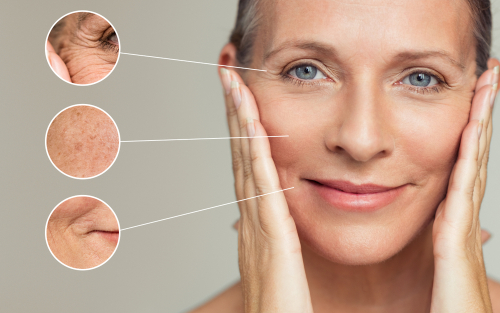
As we transition through our late thirties, forties, and into menopause, our estrogen levels naturally begin to dip. This is a completely normal part of life, but it does mean our skin’s scaffolding gets a little less support. In fact, here is a fascinating data point I recently learned: studies show that women lose approximately 30% of their skin’s collagen during the first five years of menopause. Instead of letting this statistic worry you, I want you to view it as incredibly useful information. Because we know this happens, we can easily adjust our skincare and wellness routines to provide the extra support our bodies are asking for!
Progesterone: The Calming Balancer
Progesterone is another vital player in this story. I view progesterone as the calming balancer. It works hand-in-hand with estrogen, but its main job on the surface level is regulating our sebum (oil) production. When our oil production is balanced, our skin feels comfortably moisturized without being overly greasy.
When progesterone levels start to fluctuate and decrease as we age, I often notice that skin can feel much drier than it used to. You might find that the lightweight lotion you loved in your twenties simply is not enough anymore. This drop in natural oils means our skin barrier needs a little extra love, which is exactly why switching to richer, more nourishing creams as we age is such a brilliant move.
Testosterone: The Firmness Factor
While we often think of testosterone as a male hormone, we all have it, and it plays a significant role in our skin’s health. Testosterone contributes to skin thickness and firmness. However, when estrogen and progesterone levels drop, testosterone can sometimes become more dominant in our system. I have noticed that this relative increase can sometimes trigger an unexpected plot twist: hormonal breakouts or increased facial hair, even later in life! Understanding this helps us realize that adult acne is perfectly normal and highly treatable.
Cortisol: The Stress Messenger
We cannot discuss hormones and skin aging without talking about the impact of stress. Cortisol is our primary stress hormone. In small bursts, it is helpful, but chronic stress keeps cortisol levels constantly high. From my experience, high cortisol is one of the biggest thieves of our natural glow. It actually accelerates the breakdown of collagen and elastin, making it harder for our cells to repair themselves.
I always prioritize my rest because the data backs it up beautifully. Here is a second powerful data point: clinical sleep studies reveal that sleeping less than five hours a night can double the appearance of fine lines and uneven pigmentation compared to getting a full seven to eight hours of rest. Getting enough sleep is quite literally the best, completely free beauty treatment we have at our disposal.
Visualizing the Shift: Hormone Levels Over Time
I am a very visual learner, and I find it helpful to see exactly how these internal changes map out over our lifespan. To help illustrate this, I have created a simple chart below. It shows the general, natural decline of estrogen and how it closely mirrors the natural decline of our skin’s collagen production as we move through different decades of life. This visual reminds me that our skin is simply reflecting our internal environment.
The Natural Progression of Estrogen & Collagen
(Represented as a percentage of peak levels)
| Age Group | Relative Levels (Estrogen = Blue, Collagen = Pink) |
|---|---|
| Age 25 | |
| Age 35 | |
| Age 45 | |
| Age 55+ |
Collagen
Proactive Skincare: Giving Your Skin What It Craves
Now that we understand the deep connection between hormones and skin aging, the best part comes next: taking action! I love knowing that we have so many wonderful tools available to support our skin as its needs change. It simply requires a shift in our strategy. Here are my favorite ways to update a skincare routine to support aging gracefully.
Incorporate Powerful Peptides and Retinoids
Because our natural collagen production slows down, we need to apply ingredients that gently encourage our skin cells to keep working hard. Retinoids (derived from Vitamin A) are widely considered the gold standard for this. They communicate with our skin cells, telling them to speed up their turnover rate and produce more collagen. If you find standard retinoids too harsh for naturally drier, mature skin, I highly recommend looking into peptides. Peptides are short chains of amino acids that act as building blocks for proteins like collagen and elastin, and they are incredibly gentle.
For a deeper dive into building an effective routine, I always trust the experts. You can read some fantastic, science-backed advice on how to create an anti-aging skin care plan from the American Academy of Dermatology. They offer excellent guidance on how to safely introduce active ingredients into your daily regimen.
Explore Phytoestrogens
One of the most exciting advancements I have seen in modern skincare is the use of phytoestrogens. These are plant-based compounds (often derived from soy or grape seed extract) that mimic the effects of estrogen on the skin. Applying them topically can help trick the skin into acting like it has more estrogen than it actually does. This leads to an increase in natural hyaluronic acid production, resulting in a plumper, more hydrated appearance. I always look for serums that contain soy extracts or resveratrol when my skin is feeling particularly lackluster.
Upgrade Your Moisturizer
As I mentioned earlier, the drop in progesterone means our natural oil production takes a hit. I learned quickly that the lightweight, oil-free moisturizers of my youth were no longer serving me well. I suggest upgrading to products rich in ceramides, squalane, and natural botanical oils. These ingredients help lock in moisture and protect the delicate skin barrier, preventing water loss throughout the day.
Nourishing Your Glow From the Inside Out
While what we put on our skin is vital, I firmly believe that true radiance begins from within. Our internal chemistry thrives when we feed it the right nutrients. Supporting our hormonal health through diet and lifestyle translates directly to a brighter, firmer complexion.
- Healthy Fats for Hormone Production: Hormones are actually created from cholesterol and fats. If we do not eat enough healthy fats, our bodies struggle to produce the hormones we need. I make sure to include plenty of avocados, walnuts, chia seeds, and wild-caught salmon in my diet. These are packed with Omega-3 fatty acids, which also act as natural anti-inflammatories for the skin.
- Antioxidant-Rich Foods: To combat the daily stress that breaks down our collagen, we need antioxidants. Berries, dark leafy greens, and even dark chocolate are fantastic choices. They help neutralize free radicals before they can damage our precious skin cells.
- Hydration: When estrogen drops and our skin loses its ability to hold onto water, drinking enough water becomes more important than ever. I try to drink water consistently throughout the day to keep my cells hydrated from the inside.
The foods we eat play a massive role in how youthful we look and feel. The experts at Harvard Medical School emphasize this connection brilliantly. I encourage you to read their insights on how a healthy lifestyle can actually help you look younger, focusing on the powerful link between our dietary habits and our external appearance.
Managing Stress for a Brighter Complexion
I want to touch on lifestyle habits one more time, specifically regarding cortisol. We already know that high stress levels actively destroy our skin’s structural support. Finding ways to manage daily stress is not just good for our mental health; it is a vital part of any skincare routine.
For me, managing stress means carving out just ten minutes a day for deep breathing exercises or going for a short walk in nature without my phone. It also means setting boundaries to protect my sleep schedule. When we sleep, our body enters a state of repair. Our cellular turnover peaks, and our skin works hard to heal the damage from the day. By prioritizing rest and calm, we actively lower our cortisol levels, allowing our complexion to heal and thrive.
Embracing Every Stage of Your Skin’s Journey
Looking back, I realize that for a long time, I viewed aging as something to battle against. But as I have come to understand the deep, intricate relationship between my internal chemistry and my external appearance, my perspective has completely shifted. The changes we see in the mirror are simply reflections of a life well-lived. Our bodies are incredibly smart, and they are doing exactly what they are designed to do.
By learning how to support our skin through deeply nourishing skincare, a hormone-friendly diet, and a commitment to reducing stress, we can easily maintain a beautiful, healthy glow at any age. I hope this knowledge empowers you as much as it has empowered me. It is time to celebrate our evolving beauty, treat our bodies with the kindness they deserve, and step into every new decade with absolute confidence and radiance.