Finding Relief: Why I Believe in IPL for Managing Rosacea
I still remember the daily frustration of looking in the mirror and seeing a bright, flushed face staring back at me. If you suffer from rosacea, you know exactly what I mean. The sudden flare-ups, the visible blood vessels, and the stinging sensation can easily take a toll on your self-esteem. For years, I tried every gentle cleanser, green-tinted primer, and soothing cream on the market. While some products provided temporary comfort, none of them addressed the root of the problem. That is when I discovered a game-changing option: rosacea treatment IPL.
IPL, which stands for Intense Pulsed Light, has completely transformed my approach to skincare. Instead of just masking the redness, this therapy targets the issue beneath the surface of the skin. I want to share my personal journey with this treatment, explain how it works, and help you understand why it might be the positive breakthrough you have been looking for.
What Exactly is Rosacea Treatment IPL?
When I first heard about this therapy, I assumed it was a type of laser. However, my dermatologist quickly corrected me. While lasers use a single, focused wavelength of light, Intense Pulsed Light uses a broad spectrum of light. Think of a laser like a highly focused spotlight, whereas IPL is more like a powerful camera flash that covers a wider area.
This broad-spectrum light penetrates the top layer of your skin without harming it. The light energy is specifically drawn to the red pigment in your blood vessels. When the light hits these expanded, visible capillaries that cause rosacea flushing, it turns into heat. This gentle heat collapses the problematic blood vessels. Over the next few weeks, your body naturally and safely absorbs these treated vessels, leaving you with a much more even skin tone.
The Science of Glowing, Calm Skin
What fascinates me the most about this therapy is how brilliantly our bodies respond to it. The treatment does not just destroy the bad stuff; it actually promotes the good stuff. The light energy stimulates collagen production in the lower layers of the skin. So, not only did I see a massive reduction in my facial redness, but my skin also felt firmer, smoother, and looked incredibly rejuvenated. It truly feels like an all-in-one skin reset.
Important Data: The True Impact of IPL Therapy
Before I committed to having flashes of light directed at my face, I wanted to see the facts. I am the kind of person who needs evidence. It turns out that rosacea is incredibly common, and the success rates for light therapy are wonderfully encouraging.
- Data Point 1: According to dermatological studies, an estimated 16 million Americans suffer from rosacea, meaning you and I are certainly not alone in this journey.
- Data Point 2: Clinical research shows that patients typically experience up to an 83% reduction in visible redness and broken blood vessels after completing a full series of 3 to 4 IPL sessions.
Seeing that 83% figure gave me so much hope. To help you visualize the typical progress someone might experience over a standard treatment plan, I have put together a simple chart based on average patient outcomes.
Average Redness Reduction Over Time
Session 1
Session 2
Session 3
Session 4
*Chart represents typical cumulative redness reduction percentages across a standard four-session treatment plan.
What to Expect During Your Session
I completely understand that having a new cosmetic procedure can feel intimidating. I was definitely a bit nervous before my first appointment. However, knowing exactly what to expect made the entire experience so much easier. Here is a breakdown of the process from my own perspective.
Before the Treatment
Preparation is key. About two weeks before my scheduled rosacea treatment IPL, my dermatologist advised me to stay completely out of the sun. You cannot have this treatment if you have a tan or a sunburn, because the light targets pigment. I also had to pause using certain active skincare ingredients, like retinoids and chemical exfoliants, to ensure my skin was as calm as possible.
During the Zaps
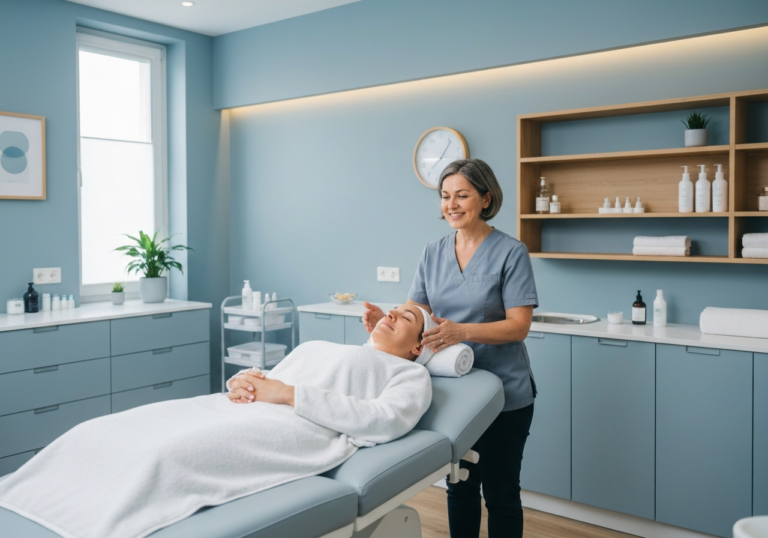
When you arrive, the technician will clean your face and apply a thick, cool layer of ultrasound gel to your skin. This gel helps the light penetrate evenly and keeps your skin comfortable. You will also be given a pair of dark, stylish safety goggles to protect your eyes from the bright flashes.
As the device moves across your skin, it emits pulses of light. I won’t lie and say you feel absolutely nothing. The most accurate way to describe the sensation is that it feels like a small rubber band gently snapping against your skin. It is entirely manageable, and each zap lasts only a fraction of a second. A full-face session usually takes me less than thirty minutes. It is so quick that I easily schedule my appointments during my lunch break!
Aftercare and Healing
Right after the session, my face usually looks a little pinker than usual—almost like I just finished a light workout or spent a few minutes too long in the sun. Some of my darker sun spots and broken blood vessels actually look slightly darker for a few days before they fade away. This is completely normal and a sign that the treatment is working.
The post-care routine is incredibly simple but very important. I slather on a high-quality, mineral-based zinc oxide sunscreen every single morning. I switch to a super gentle, fragrance-free cleanser, and I avoid hot showers, saunas, and intense workouts for about 48 hours. Keeping the skin cool and protected from UV rays guarantees the best possible results.
Are You a Good Candidate for This Therapy?
While I am a huge advocate for this technology, it is important to note that it works best for specific skin types. Because the light targets contrasting pigments (the red of the blood vessels against the background of your skin), IPL tends to be most effective for individuals with lighter skin tones. If you have a deeper complexion, the light can sometimes struggle to differentiate between the melanin in your skin and the hemoglobin in the blood vessels, which can lead to unwanted pigmentation changes.
If you have darker skin, please do not feel discouraged! There are amazing, safe alternatives available, such as specific vascular lasers (like the Nd:YAG laser) that bypass the skin’s surface pigment. Always consult with a board-certified dermatologist to find the exact right fit for your unique, beautiful skin.
Pairing Light Therapy with Daily Management
One important lesson I have learned on my journey is that IPL is a powerful tool, but it is not a magical cure that allows you to ignore your daily habits. Rosacea is a chronic condition, which means managing it requires a team effort between professional treatments and at-home care.
I still have to be mindful of my personal triggers. For me, spicy foods and sudden temperature changes can still cause a minor flush. By combining my light therapy results with a solid daily routine, I maintain my clear skin much longer. If you want to learn more about comprehensive medical strategies for this condition, I highly recommend reading the excellent resources provided by the American Academy of Dermatology on rosacea treatment. Their insights helped me understand the importance of avoiding common triggers while undergoing light therapy.
Comparing IPL to Other Popular Therapies
When I was researching ways to calm my complexion, I found a dizzying array of options. It helped me to compare them directly to see why intense pulsed light stood out.
Topical Creams vs. Light Therapy
Prescription creams and gels are usually the first line of defense. They work well for reducing the inflammatory bumps and pimples that sometimes accompany rosacea. However, topicals never did much for my broken blood vessels or background redness. Light therapy physically shuts down those vessels, providing structural relief that creams simply cannot achieve.
Oral Antibiotics vs. Light Therapy
Sometimes, doctors prescribe low-dose oral antibiotics to fight the inflammation of severe flare-ups. While effective, I did not want to be on oral medication long-term due to potential stomach issues. IPL allowed me to step away from daily pills and focus on a localized, surface-level treatment that yielded highly visible results.
If you are exploring the full spectrum of medical options, the Mayo Clinic’s guide on diagnosing and treating rosacea offers a fantastic overview of how different therapies, including lasers and medications, can be tailored to your specific symptoms.
Real Talk: Potential Side Effects to Keep in Mind
I believe in being totally transparent. While my experience has been overwhelmingly positive, there are a few minor side effects you should be aware of. As I mentioned, mild redness immediately following the treatment is a given. You might also experience slight swelling, particularly around the delicate eye and cheek area.
In very rare cases, if the device is used incorrectly or on the wrong skin type, it can cause blistering or changes in skin pigmentation (either dark spots or light spots). This is exactly why you must choose a qualified, experienced medical professional. Do not hunt for cheap deals at unverified spas when it comes to your face. Investing in a trusted dermatologist or certified laser nurse will ensure you get beautiful, safe results.
The Financial Investment and Maintenance
Let’s talk about the cost, because I know that is a major factor for most of us. Because rosacea treatment IPL is considered a cosmetic procedure, it is typically not covered by health insurance. A single session can cost anywhere from $300 to $600, depending on where you live and the expertise of your provider.
Since a full series requires 3 to 4 sessions spaced about a month apart, it is definitely a financial commitment. However, when I added up the hundreds of dollars I was spending every year on expensive color-correcting makeup, high-end soothing serums, and various failed treatments, the investment made complete sense.
After finishing my initial round of sessions, my skin looked incredibly clear. Now, to maintain my bright, even complexion, I only go back for a single touch-up session once a year. It has become a standard, easy part of my annual self-care routine.
Moving Forward with Clearer, Brighter Skin
Dealing with chronic facial redness can feel incredibly isolating. I spent so much of my life hiding behind heavy foundations and feeling self-conscious every time I entered a warm room. Discovering rosacea treatment IPL has been one of the most empowering steps I have taken for my physical appearance and my mental well-being.
The science is proven, the sessions are remarkably quick, and the downtime is absolutely minimal. Seeing my skin tone even out and watching those stubborn broken capillaries fade away gave me a renewed sense of confidence. If you are tired of merely covering up your symptoms and want to actively reclaim your natural, beautiful complexion, I highly encourage you to book a consultation with a dermatologist.
You deserve to feel comfortable and radiant in your own skin. By exploring light therapy, protecting your face from the sun, and treating yourself with grace, you are taking a wonderful step toward a brighter, calmer future.